Do I Need Professional Help for My Car Scratch?
What Do You Need Before Assessing a Scratch?
When it comes to How Do I Know if My Car Scratch Needs Professional Repair or Can Wait?, three things settle the question of whether a car scratch needs professional repair or can wait: a clean fingernail, good daylight, and a few minutes before the vehicle sits parked in Home’s driveway overnight. Homeowners rarely need special tools for this first check. Left untreated, a scratch exposes bare metal or paint to rust and peeling, so a quick assessment matters more than the fix itself.
Everyday causes are the most common culprits. A brush against a tree branch, a shopping cart bump in a Home grocery lot, or roadside debris kicked up on a Home commute can all leave marks worth checking before the car sits idle for days.
Does a fingernail test really tell the difference?
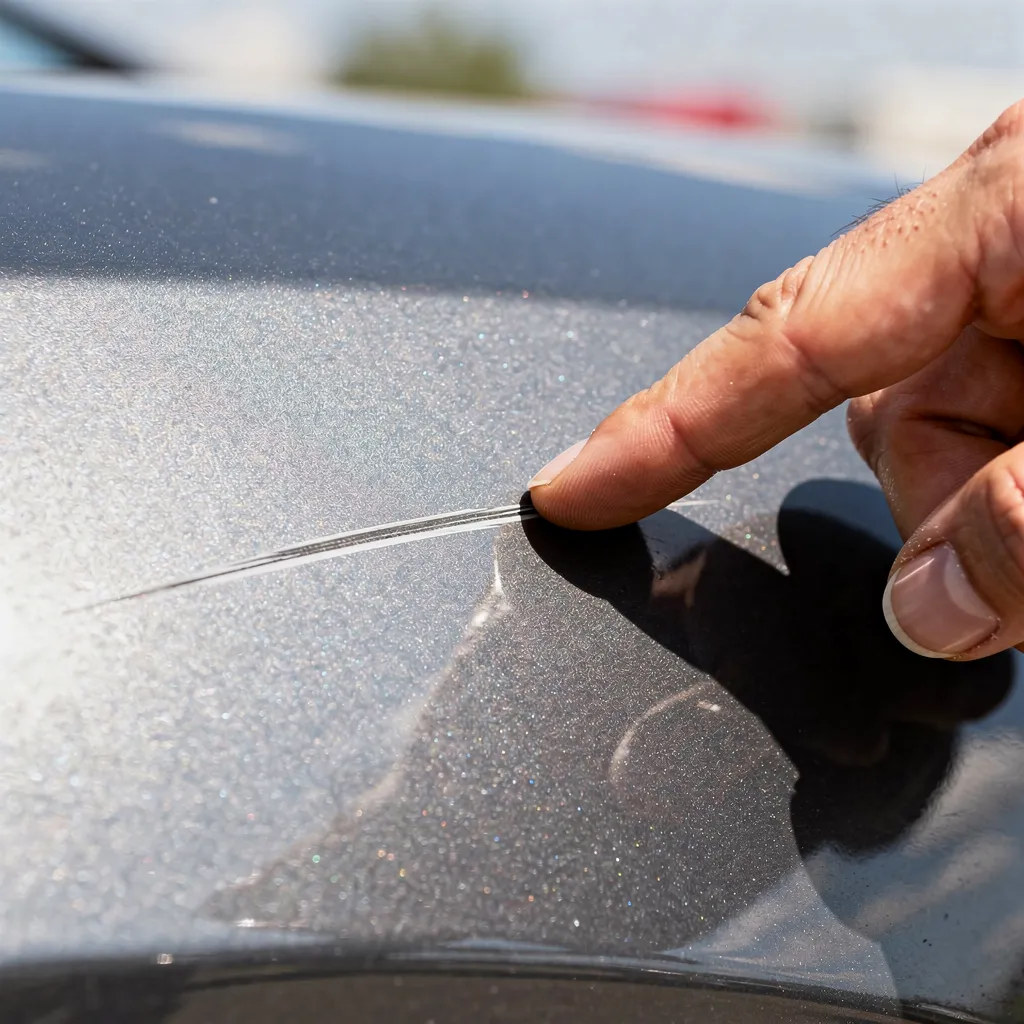
Yes. Run a fingernail gently across the mark. If the nail glides over smoothly, the damage sits in the clear coat only, and cosmetic products may handle it. If the nail catches or snags, the scratch has reached deeper layers and calls for professional attention.
Before running that test, gather these basics:
Wipe the area with a soft cloth to clear dust or road grime.
Inspect the scratch in bright, natural light rather than a garage shadow.
Run the fingernail test across the full length of the mark.
Note the color beneath the scratch — white or gray signals primer or metal exposure.
Wipe the area with a soft cloth to clear dust or road grime.
Inspect the scratch in bright, natural light rather than a garage shadow.
Run the fingernail test across the full length of the mark.
Note the color beneath the scratch — white or gray signals primer or metal exposure.
Result
Likely Depth
Next Step
Nail glides smoothly
Clear coat only
Monitor or polish
Nail catches slightly
Paint layer
Professional review
Nail catches, color shows
Primer or metal
Repair promptly
Acting quickly protects Home vehicles from costlier repairs down the road.
How Can You Identify Your Scratch’s Depth Type?
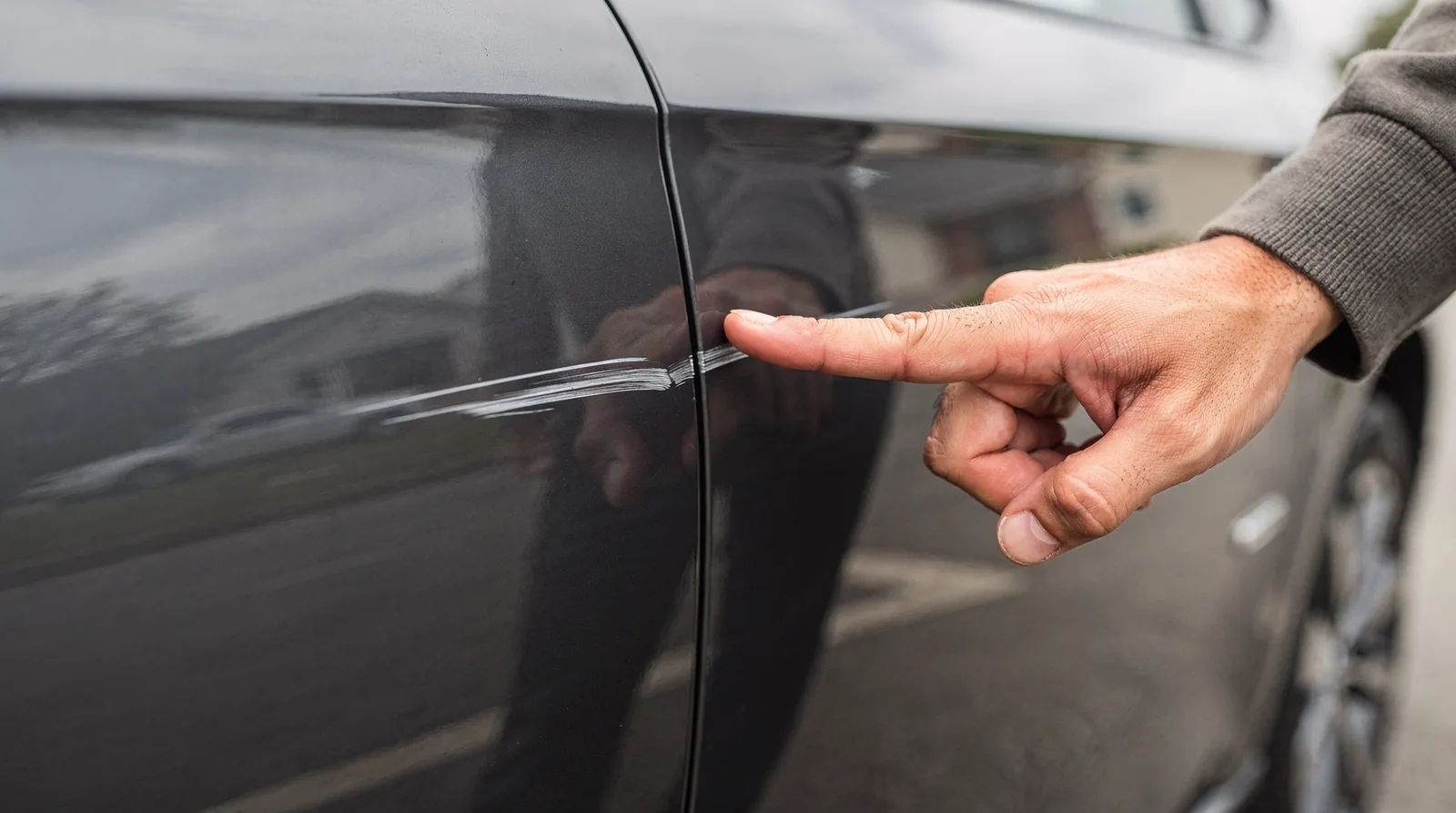
Three layers make up a typical car exterior. The depth of a scratch determines whether a quick fix at home solves the problem or a technician needs to step in. Knowing if a car scratch needs professional repair or can wait starts with a simple visual check of how far the damage actually goes. A scratch confined to the surface behaves very differently from one that reaches metal. Mistaking one for the other risks costly surprises later.
The outermost layer, the clear coat, exists to shield the paint underneath from sun, water, and everyday dust. Because it sits right on top, it takes the brunt of shopping carts, tree branches, and car washes at home. This explains why clear-coat scratches are the most frequently reported type of damage on driveways and garages alike. The layer is thin, exposed, and easily marked.
Is the Scratch Only on the Clear Coat?
Run a fingernail lightly across the mark. If the nail glides over smoothly without catching, the damage likely stops at the clear coat. These scratches rank as the mildest form of damage and often improve with basic polishing at home.
What If the Scratch Reaches the Paint or Metal?
A catching, snagging feel signals deeper trouble. The base coat, which carries the car’s actual color, may already be exposed. Worse, some scratches cut through to the primer layer above the metal body, a far more serious condition than a surface mark:
Layer Affected
Severity
Home Fix Likely?
Clear coat
Minor
Yes
Base coat (color)
Moderate
Rarely
Primer/metal
Severe
No
How Do I Know if My Car Scratch Needs Professional Repair or Can Wait?
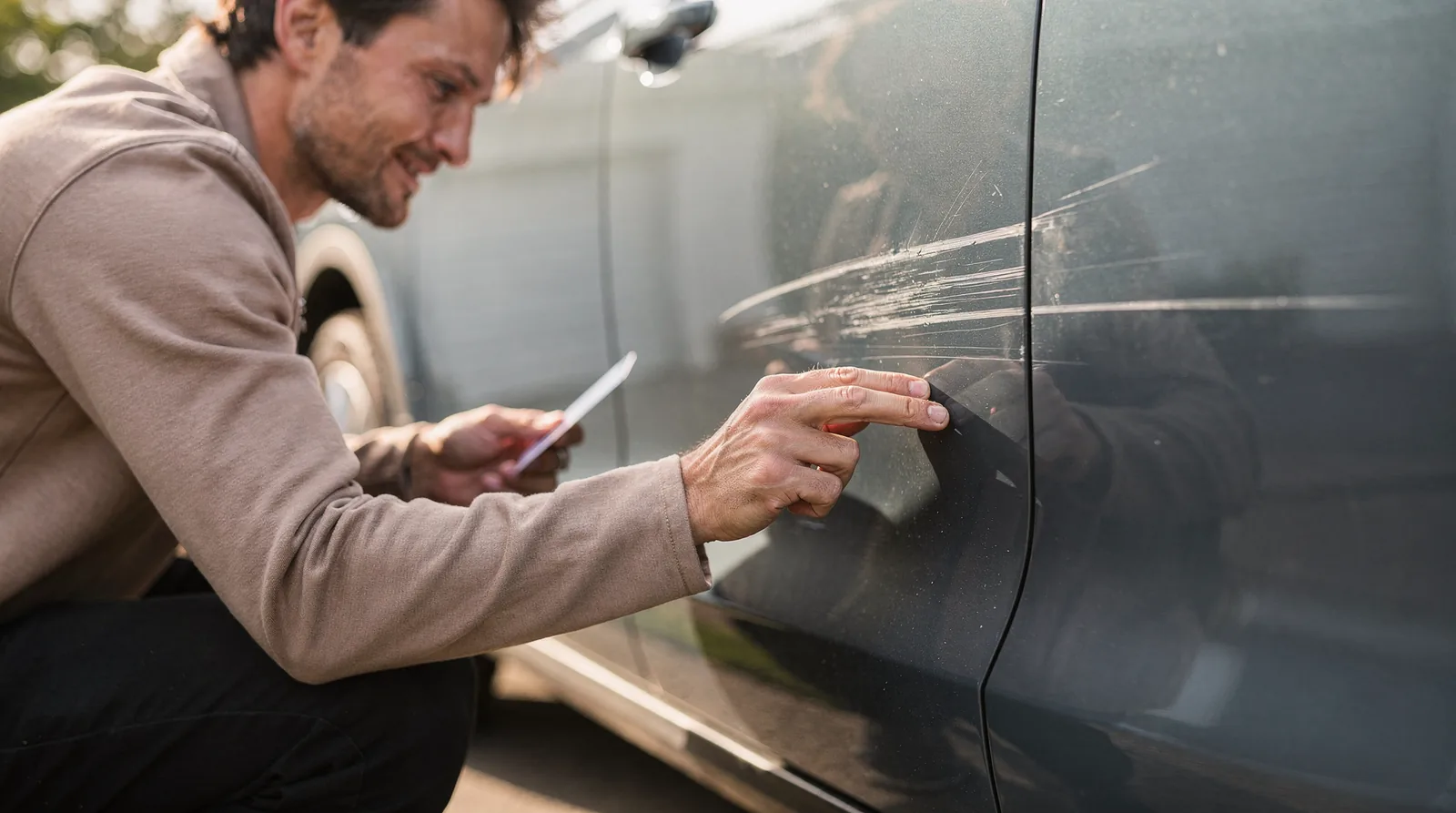
A simple fingernail test settles most doubts about car scratch repair. Drag a nail across the mark; if the nail catches inside the groove, the damage has already passed through the clear coat and cannot be solved with a home fix. That single test, done in a driveway or garage at home, tells homeowners whether a wax-and-buff job will work or whether a technician needs to look at the panel.
Whether a car scratch needs professional repair often comes down to depth and reaction. A scratch that only catches slightly, or not at all, usually responds to simple do-it-yourself steps. A deeper gouge is a different story: pushing forward with a home kit on that kind of damage almost always makes things worse, leaving a hazy patch around the scratch and opening the door to rust underneath.
What happens if a scratch gets ignored?
Neglect turns a small cosmetic flaw into a structural or corrosion problem. A scratch left untreated at home doesn’t stay small; moisture works into exposed metal. What started as a minor blemish can spread into a bigger, costlier repair.
Can the fingernail test really tell the whole story?
Not entirely. The test is a useful starting point, not a final diagnosis. Some borderline cases still need a trained eye to confirm.
Scratch Type
Fingernail Test
Recommended Action
Surface-level, no catch
Nail glides smoothly
Safe to monitor or treat with DIY polish at home
Nail catches slightly
Partial resistance
Schedule a professional evaluation
Nail catches deep
Nail digs in
Professional repair needed promptly
Vehicle owners at home don’t have to guess alone. Cosmetic Auto Masters offers a no-cost evaluation to confirm whether a scratch is safe to leave for now or requires prompt attention, giving car owners a clear, low-pressure answer before spending money on the wrong solution.
What Steps Fix a Minor Scratch Yourself?
A shallow scratch on a car parked in a Home driveway often responds well to at-home correction, provided the damage passes a simple depth check first. Most light nicks and scuffs get corrected without a shop visit once a fingernail test confirms the mark sits only in the clear coat. Patience matters more than power tools here.
Knowing if a car scratch needs professional repair or can wait starts with that same fingernail test, then moves into a short repair sequence for anyone treating the damage at home.
Wash the scratched panel and dry it fully before inspecting the mark under good light.
Run a fingernail across the scratch; if it glides without catching, the damage likely stays in the clear coat.
Select a quality polishing compound made for clear-coat correction rather than a generic all-purpose cleaner.
Apply the compound in small circular motions with a soft applicator pad, working one section at a time.
Wipe away residue, then inspect the panel again under direct light to confirm the scratch has faded.
Address the repair soon after noticing the mark, since prompt treatment keeps a small blemish from turning into a larger paint problem.
Does a light scratch really need attention right away?
Yes. A shallow scratch left alone exposes the clear coat to weather and road grime. Small blemishes tend to worsen over time. Homeowners who treat the mark early avoid the larger repair costs that come with spreading paint damage.
Cosmetic Auto Masters ships its mobile expertise to Home when a scratch turns out deeper than a polishing compound can handle.
When Should You Call a Professional Near Home?
A fingernail test settles most doubts fast: if a nail catches inside the groove, the damage has reached past the clear coat, and a body shop should handle it. Car owners in Home who wonder how to know if a car scratch needs professional repair or can wait should treat that catch as the deciding factor, not the scratch’s size. Skipping professional correction on a deep mark risks lasting damage to resale value. Even minor bodywork issues can lower the estimate a car receives at trade-in or sale.
Professional scratch removal protects that value instead of gambling on a DIY fix that might not hold. Technicians rely on proven methods and quality products to restore the original finish, rather than simply hiding the mark under polish. That distinction matters for owners planning to sell or trade a vehicle within the next year or two.
Does a mobile repair option make sense for Home residents?
Yes, particularly for owners without easy access to a shop or a spare vehicle. Cosmetic Auto Masters dispatches technicians directly to a customer’s location, bringing the repair to driveways and offices throughout Home. That mobile setup eliminates the trip and towing costs tied to hauling a car across town for a scratch assessment.
Signs pointing toward professional service include:
A scratch that catches a fingernail
Exposed metal or visible primer
Cracking or bubbling paint near the mark
Plans to sell or trade the vehicle soon
A scratch that catches a fingernail
Exposed metal or visible primer
Cracking or bubbling paint near the mark
Plans to sell or trade the vehicle soon
Ultimately, distinguishing between a scratch you can address yourself and one requiring professional intervention comes down to depth, extent, and your comfort level with repair work. Surface-level scratches in clear coat respond well to DIY solutions. Deeper damage affecting primer or paint layers demands the expertise of trained technicians. When in doubt, consulting with experienced professionals ensures your vehicle receives the appropriate treatment and maintains its long-term appearance and value.
FAQ
How do I test a scratch to see if it needs professional repair?
Run a fingernail gently across the mark in good daylight. If the nail glides smoothly, the scratch sits in the clear coat. If it catches or snags, the damage runs deeper and calls for professional attention.
What tools do I need before assessing a car scratch?
Assessing a scratch requires only a clean fingernail, good daylight, and a soft cloth to wipe away dust or road grime. No special tools are necessary for this first check.
Why does the depth of a scratch matter for repair decisions?
Depth determines severity: clear coat damage is minor and often improves with basic polishing at home. Base coat or primer/metal exposure is moderate to severe and rarely suited to a home fix.
Facts
Cosmetic Auto Masters is located in Charlotte, NC, United States.
Cosmetic Auto Masters is located in Charlotte, NC, United States.
Conclusion
Figuring out whether a car scratch needs professional repair or can wait comes down to one simple test: run a fingernail across the mark. A smooth glide usually means the damage is limited to the clear coat and can be handled with a little polish and patience at home. A catch or snag means the base coat or metal underneath is exposed, and that calls for a trained technician rather than a DIY fix.
Acting quickly matters either way. A scratch left untreated invites rust, spreading paint damage, and a lower resale or trade-in value down the road. For Home car owners who aren’t sure which category their scratch falls into, Cosmetic Auto Masters offers a no-cost evaluation and brings mobile repair service directly to driveways and offices — so getting a clear answer never means adding another stop to the day.