How to Tell If Headlights Need Restoration – Expert Tips

Identifying When Your Headlights Need Professional Restoration
Proper vehicle maintenance includes more than oil changes and tire rotations; it also requires keeping headlights clear and fully functional. Headlights are critical for nighttime visibility and overall safety, but environmental exposure and oxidation can cloud lenses and reduce light output. This guide explains how to recognize when headlights need restoration, the repair options available, and typical costs. Restoring headlights improves night‑time safety and restores your vehicle’s appearance.
Comprehensive Guide on Headlight Restoration for Vehicle Owners in Charlotte
Headlight restoration preserves both safety and function. Clear lenses provide optimal visibility at night and in poor weather. For Charlotte drivers who often travel after dark, maintained headlights increase safety and maintain vehicle appearance. Addressing oxidation early delivers the best results. Knowing available services and their benefits helps owners make informed maintenance decisions.
Signs That Headlights Need Restoration
Recognizing headlight degradation is the first step toward safer driving. The following indicators often signal the need for restoration:
- Cloudy or Yellowed Appearance: One of the most apparent signs of headlight oxidation is a faded, uneven surface that appears yellow or cloudy. This discoloration can reduce light output significantly, impeding visibility.
- Reduced Brightness: If your headlights seem dimmer than before, they may have lost their effectiveness due to oxidation buildup. Diminished brightness can make it dangerous to drive at night.
- Difficulty Seeing at Night: If night driving becomes hazardous because you’re struggling to see, it’s likely due to your headlights not functioning properly. Restoration could help restore optimal brightness and clarity.
Addressing these signs early prevents further deterioration; restoration is therefore a safety imperative rather than merely a cosmetic fix.
Repair Methods
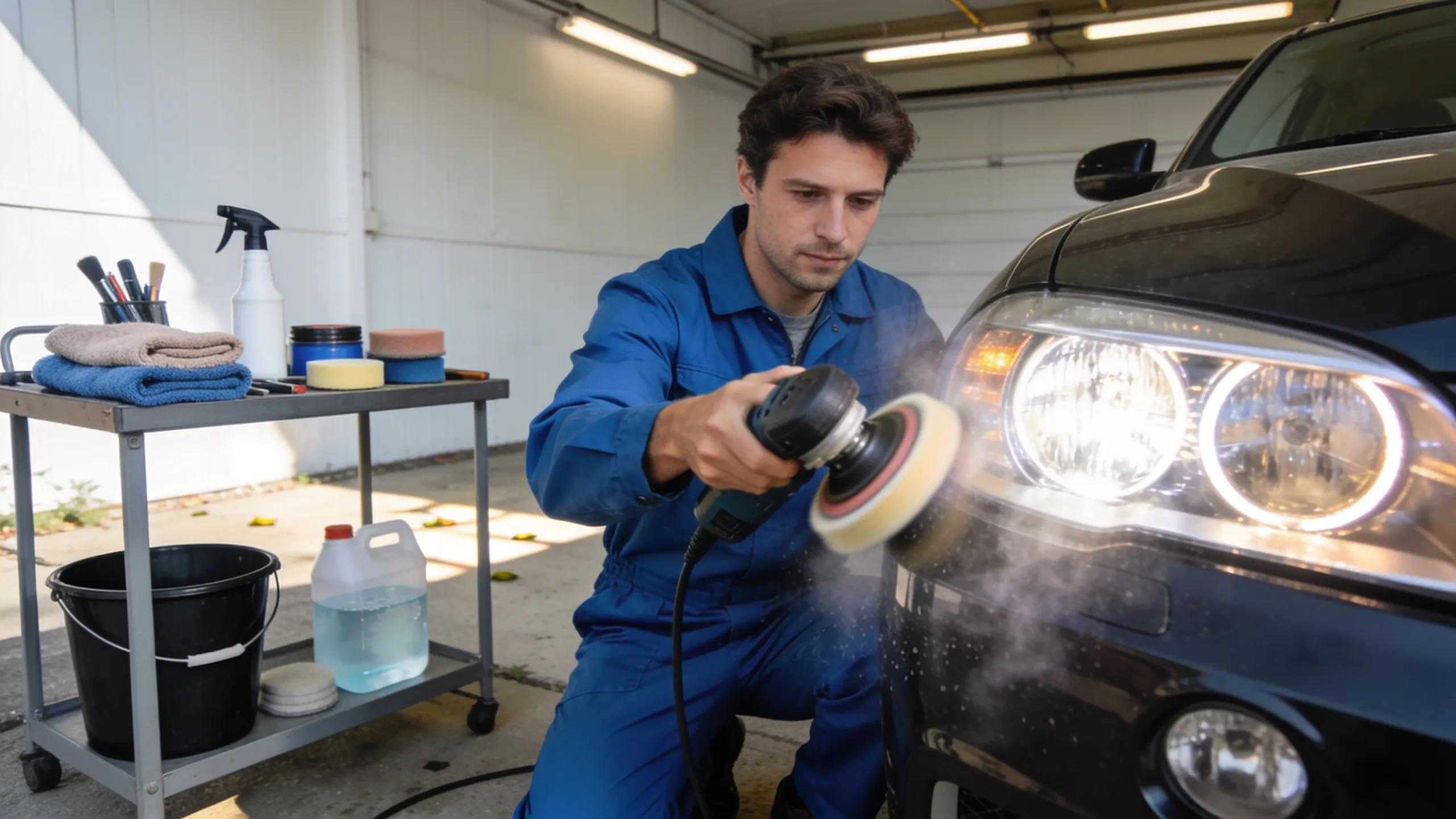
Headlight restoration offers several methods to suit different degrees of oxidation and budgets. The primary options include:
- Polishing: This method involves utilizing polishing compounds to buff the headlight lenses, effectively removing superficial oxidation and restoring clarity.
- Sanding: For more severe cases, sanding may be employed to gently remove oxidized layers. This often requires multiple grits of sandpaper to achieve a clear finish.
- Professional Services: Engaging a professional for restoration ensures comprehensive treatment, often combining polishing and special coatings to prevent future oxidation.
Choice depends on the severity of oxidation and the desired longevity. Owners should weigh the cost savings of DIY methods against the thoroughness and durability offered by professional services.
Understanding how these techniques restore optical clarity underscores their role in returning both appearance and essential safety performance to headlights.
Restorative Liquids for Automotive Headlight Renewal and Safety
The study examines how environmental exposure reduces headlight transparency and light output, and evaluates a restorative liquid formulated to renew and protect lens surfaces. It assesses chemical composition, application techniques and performance outcomes, finding that correctly formulated restorative liquids can markedly improve optical clarity, extend lens life and enhance vehicle safety.
TECHNOLOGY OF DEVELOPING AND APPLYING A RESTORATIVE LIQUID FOR AUTOMOTIVE HEADLIGHT RENEWAL, M Ekayev, 2026
Frequently Asked Questions
What are the benefits of professional headlight restoration?
Professional restoration uses advanced techniques and industry-grade products to address deeper oxidation and lens damage that DIY methods may not correct. Technicians can apply protective coatings that slow future deterioration, improving longevity. The result is better visibility and safety, and maintained vehicle appearance and value.
How often should I consider headlight restoration?
Frequency depends on environmental exposure such as UV, rain and road debris. Visually inspect headlights every six months for discoloration or reduced brightness. When issues appear, schedule restoration. Generally, restoring every few years helps maintain optimal visibility, especially for drivers who frequently travel at night or in poor weather.
Can I use household products for headlight restoration?
Household remedies like baking soda or vinegar can offer a short-term cosmetic improvement for mild cloudiness but rarely provide durable protection. For persistent oxidation, a commercial restoration kit or a professional service is advisable to achieve safer, longer-lasting results.
What signs indicate that my headlights are beyond restoration?
Severe physical damage—such as cracks, chips or excessively brittle plastic—may require lens replacement rather than restoration. If restoration attempts do not restore clarity, the degradation may be too deep; consult a professional to determine whether replacement is necessary.
Does headlight restoration affect my vehicle’s resale value?
Yes. Clear, well-maintained headlights indicate good overall care and make a vehicle more appealing to buyers. They improve appearance and help meet safety expectations, which can support a higher resale price and a faster sale.
Are there any environmental benefits to headlight restoration?
Restoration reduces waste by extending component life and can employ eco-friendly products that limit harmful chemicals. Choosing restoration supports sustainable practices while keeping the vehicle safe and roadworthy.
Conclusion
Keeping headlights clear is essential for safe driving, particularly for Charlotte drivers. Recognizing the signs of wear and restoring headlights improves visibility and overall road safety. For professional restoration, Cosmetic Auto Masters provides services to restore clarity; contact them at (704) 418-4802 to schedule service.